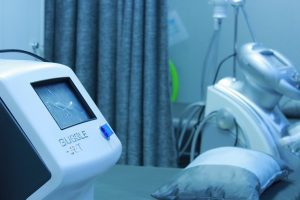
Imagine you are in an accident, or a close friend or relative develops an unexpected illness. Unfortunately, a hospital visit is required to get the care you and your loved ones need. Your focus is on healing or making sure your loved ones are properly cared for. Do you stop to think how clean the bed is? Or how clean the surfaces are in the room? Are hospitals clean enough? The number of healthcare-associated infections (HAIs) has reduced significantly over the years. However, according to the CDC, 1 in 25 patients currently in the hospital has at least one HAI. That is a scary statistic. In this article, we will explore issues related to disinfection practices and new cleaning technologies that are helping the number of HAI cases drop.
Properly Trained Personnel
One
study exhibits that among all the surfaces that require cleaning in a hospital, only 40-50% of surfaces were being disinfected by housekeepers. Performance levels of housekeepers vary. The factors include the time spent cleaning surfaces, the amount of cleaning supplies used, and the amount of cleaning the surfaces receive. The study also shows that special cleaning teams, such as infection control personnel, achieve better results at reducing contamination than routine housekeepers.
Another problem for facilities is the high turnover rate for cleaning personnel, which can reach 30-50%. According to a survey conducted, a significant reason why cleaning services are not up to par is that the staff is not clear on who is responsible for cleaning which surfaces and equipment. This hindrance might be attributed to a lack of quality training in the workplace.
Disinfecting Practices
Besides the poor performance of personnel, there are other factors that may contribute to insufficient cleaning practices. Certain types of surfaces can be harder to clean than others. For example, disinfecting wipes clean some surfaces more effectively than microfiber cloths. Disinfecting wipes also need to have the appropriate amount of antimicrobial activity to be effective in targeting pathogens. Some wipes may not even eliminate all necessary pathogens.
Another challenge is that over-dilution of cleaning solutions can also be ineffective. This setback can occur because housekeepers do not dilute solutions at the proper ratio or because auto-dilution systems malfunction. One review at a teaching hospital tested 33 automated disinfectant dispensing stations for proper dilution. Fifty percent of the stations did not have the required ammonium concentrations to effectively clean surfaces.
Contamination
Disinfectant solutions may also become contaminated if not used as specified by the manufacturer. According to a study of nine hospitals, 28 buckets containing active disinfectants also housed bacteria. The researchers discovered that housekeepers did not follow the manufacturer’s directions on how to use the product, thereby contaminating more surfaces.
The Improving Situation
New cleaning technologies will soon arrive in hospitals and other medical facilities. Our next article in this series will feature some of these tactics and how they are improving the environment for patients and medical personnel.
Emerging Solutions and Evidence-Based Improvements
Beyond improved training and adherence to protocols, hospitals are increasingly relying on evidence-based innovations to further reduce HAIs. One major advancement is the use of enhanced environmental monitoring. Tools such as fluorescent markers and adenosine triphosphate (ATP) testing allow infection prevention teams to objectively measure how well surfaces are being cleaned and to provide real-time feedback to staff. Studies show that monitoring programs combined with feedback can significantly increase the proportion of properly disinfected high-touch surfaces.
Standardization is also playing a key role. Clear delineation of cleaning responsibilities between environmental services staff and clinical personnel, along with standardized checklists for patient rooms, has been associated with improved outcomes. The World Health Organization (WHO) emphasizes that environmental hygiene is a core component of infection prevention and control and should be embedded into hospital safety culture.
While no single intervention can eliminate HAIs entirely, the combination of proper training, validated products, monitoring, and new technologies continues to strengthen hospital defenses. As research and innovation progress, patients and families can be reassured that cleanliness is no longer an afterthought, but a critical element of modern healthcare quality and safety.
Got Medicare Questions?
We hope that this information on the cleanliness of hospitals is useful to you.
Let us help you answer your questions so you can get back to the activities you enjoy the most.
Call (888) 446-9157, click here to get an INSTANT QUOTE, or leave a comment below!
See our other websites:
EmpowerHealthInsuranceUSA.com
EmpowerMedicareSupplement.com
EmpowerMedicareAdvantage.com
This article was updated on January 8, 2026.