

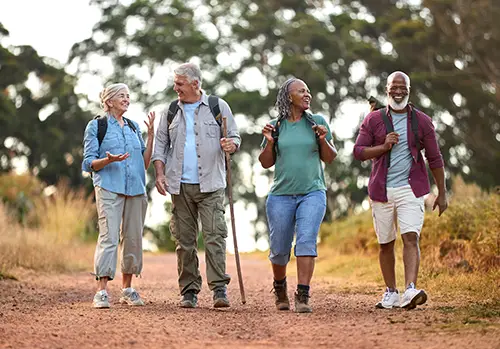
Staying active is one of the most important parts of maintaining a healthy lifestyle, especially for seniors. While traditional workouts or gym routines may not appeal to everyone, regular physical activity can help improve overall health, energy levels, balance, and independence.
Many older adults may avoid exercise because of health concerns, joint pain, fear of falling, or mobility limitations. However, staying active can actually help combat many of the health challenges commonly associated with aging. Regular movement supports heart health, helps manage weight, improves flexibility and balance, strengthens memory, and promotes better overall well-being.
For many seniors, Medicare health plans may include fitness or wellness benefits such as gym memberships and exercise programs. But staying active does not have to mean spending hours inside a gym. One enjoyable and accessible option is hiking.
What Is Hiking?
Hiking is simply walking outdoors on trails, nature paths, or scenic routes. It can range from easy walks through local parks to more challenging mountain trails. Hiking allows people to enjoy fresh air, natural scenery, and gentle exercise all at the same time.
The popularity of hiking continues to grow across the United States and around the world. According to the American Hiking Society, millions of Americans hike every year because it offers both physical and mental health benefits.
One of the best things about hiking is that it can be adjusted to fit almost any fitness level. Whether it is a short walk around a nearby nature preserve or a longer trail adventure, hiking is a flexible activity that encourages movement without feeling like a traditional workout.
Health Benefits of Hiking for Seniors
Hiking is considered an aerobic activity, which means it helps strengthen the heart and lungs while improving endurance. Even moderate hiking can provide several important health benefits for seniors.
Improves Heart Health
Regular walking and hiking can help improve cardiovascular fitness and circulation. Staying active may also help lower the risk of heart disease, stroke, and high blood pressure.
Supports Balance and Mobility
Walking on natural trails helps engage muscles used for stability and coordination. Over time, hiking may improve balance and mobility, which can help reduce the risk of falls.
Strengthens Bones and Muscles
Because hiking is a weight-bearing activity, it can help maintain bone density and strengthen leg muscles. Some hikers also use walking poles, which engage the upper body and provide additional support and stability.
Boosts Mental Health
Spending time outdoors can help reduce stress, improve mood, and support mental clarity. Research continues to show that time in nature may positively impact emotional well-being and cognitive health.
Encourages Independence
Maintaining an active lifestyle can help seniors continue performing daily activities more comfortably and confidently, supporting long-term independence.
Hiking Safety Tips for Seniors
Before starting any new exercise routine, seniors should speak with their healthcare provider to determine what level of activity is appropriate for them.
Here are a few simple hiking tips for beginners:
- Start with shorter, easier trails.
- Wear supportive walking or hiking shoes.
- Bring water and stay hydrated.
- Use walking poles if additional balance support is needed.
- Avoid hiking during extreme heat.
- Hike with a friend or group whenever possible.
- Take breaks as needed and listen to your body.
According to WebMD, choosing beginner-friendly trails and pacing yourself can help make hiking safer and more enjoyable for older adults.
How to Find Hiking Trails Near You
Finding local hiking trails has become easier than ever thanks to online resources and mobile apps. One of the most popular platforms is AllTrails, which allows users to search for nearby trails based on difficulty level, distance, and accessibility.
Many local parks and nature centers also offer paved walking paths or beginner-friendly trails ideal for seniors looking to stay active outdoors.
Nature and Healthy Aging
Spending time outdoors offers benefits that go beyond physical fitness. According to the National Environmental Education Foundation, outdoor activities can support healthier aging by encouraging movement, lowering stress, and helping people stay socially engaged.
Whether it is a peaceful walk through a local park or a scenic trail with family and friends, hiking provides an enjoyable way to stay active while connecting with nature.
Final Thoughts
Exercise does not have to feel overwhelming or intimidating. Hiking offers seniors a simple, flexible, and enjoyable way to improve physical and mental health while spending time outdoors.
By starting small, choosing the right trails, and staying consistent, hiking can become a healthy habit that supports long-term wellness and independence at any age.
Got Medicare Questions?
We hope that this information on hiking is useful to you. If you want to learn more about hiking read our article Hiking Preparation.
Let us help you answer your questions so that you can get back to the activities that you enjoy the most.
Call (888) 446-9157, click here to get an INSTANT QUOTE, or leave a comment below!
See our other websites:
This article was updated on May 21, 2026.